Showing posts with label Aaron Dembski-Bowden. Show all posts
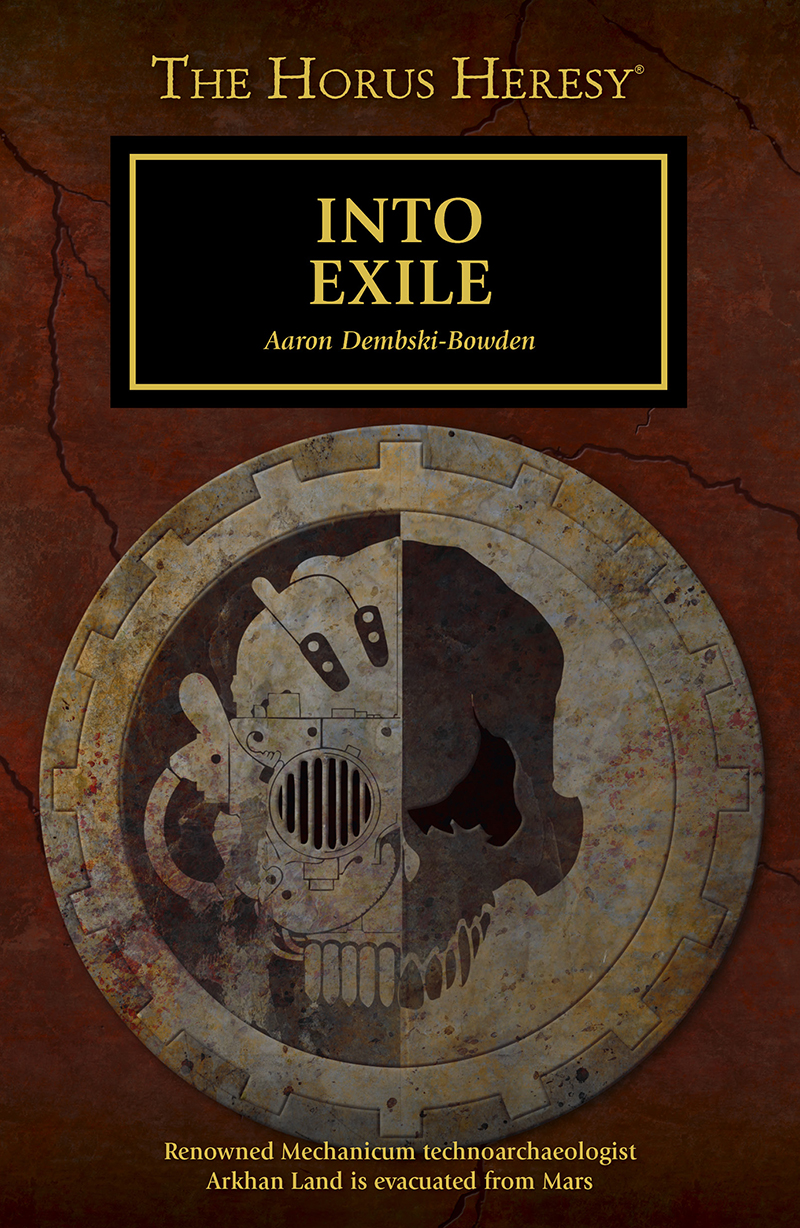
Review: Into Exile by Aaron Dembski-Bowden
0
When the traitorous allies of Horus and Kelbor-Hal seized Mars, they sent elite hunters to apprehend key targets and ensure that any loyal resistance would fail. One such target was the legendary technoarchaeologist Arkhan Land, the discoverer of many lost treasures and curiosities from mankind's Golden Age - and the Imperial Fists cannot allow such a valuable mind to fall into the hands of the enemy. Does Land have good reason to fear his apparent saviours?
Another Horus Heresy story from the Black Library Advent Calendar. This one's a prequel to The Master of Mankind and features Arkhan Land, who was one of my favorite characters from the numbered novel.

The Story:
" When the traitorous allies of Horus and Kelbor-Hal seized Mars, they sent elite hunters to apprehend key targets and ensure that any loyal resistance would fail. One such target was the legendary technoarchaeologist Arkhan Land, the discoverer of many lost treasures and curiosities from mankind's Golden Age - and the Imperial Fists cannot allow such a valuable mind to fall into the hands of the enemy. Does Land have good reason to fear his apparent saviours?"

The Review:
Into Exile is a story told in reverse, featuring Arkhan Land's escape from sacred Mars. Hunted by a Mechanicum construct and protected by a single Imperial Fists legionary, Arkhan has to swallow his pride and get to safety. This is also set during the initial evacuation from Mars, which we've seen tackled by Mechanicum in the single-digit novels of the series.

Sadly, it didn't work for me. The concept seems novel at first, intriguing, but I didn't feel like it added much, if anything, to start with the conclusion and work back towards the beginning.
There were no unexpected twists that might have turned the plot on its head in ways that complimented the unique style, and knowing exactly how a character would meet his end made the whole evacuation chase here feel rather dull. Knowing that the hero escapes (which was obvious from him being a part of The Master of Mankind) and the protector sacrifices himself in the very first scene, made the tension evaporate for me.

I liked the character of Arkhan once again, but Nicanor felt flat to me. Stoic, stubborn and dutiful, but that's an Imperial Fist in a nutshell anyway. The plot itself is simple and filling a gap that I don't think really needed plugging. I'm glad to see AD-B experimenting with the short story format once again, which I loved in previous advent calendar series, but I'm not sure the subject matter lent itself to the test.

Into Exile on Goodreads
read more »
Review: The Master of Mankind by Aaron Dembski-Bowden
0
As war splits the galaxy, the Emperor toils in the vaults beneath His Palace. But his great work is in peril, with the forces of Chaos closing in…

While Horus’ rebellion burns across the galaxy, a very different kind of war rages beneath the Imperial Palace. The ‘Ten Thousand’ Custodian Guard, along with the Sisters of Silence and the Mechanicum forces of Fabricator General Kane, fight to control the nexus points of the ancient eldar webway that lie closest to Terra, infested by daemonic entities after Magnus the Red’s intrusion. But with traitor legionaries and corrupted Battle Titans now counted among the forces of Chaos, the noose around the Throneworld is tightening, and none but the Emperor Himself can hope to prevail.
Tough review to write, though that is only fair considering how tough writing the book was on Aaron. Still, I'm conflicted on the result. This might also easily be the most depressing book in the series to date. Hear me out, I'll explain.

The Story:
"As war splits the galaxy, the Emperor toils in the vaults beneath His Palace. But his great work is in peril, with the forces of Chaos closing in…

While Horus’ rebellion burns across the galaxy, a very different kind of war rages beneath the Imperial Palace. The ‘Ten Thousand’ Custodian Guard, along with the Sisters of Silence and the Mechanicum forces of Fabricator General Kane, fight to control the nexus points of the ancient eldar webway that lie closest to Terra, infested by daemonic entities after Magnus the Red’s intrusion. But with traitor legionaries and corrupted Battle Titans now counted among the forces of Chaos, the noose around the Throneworld is tightening, and none but the Emperor Himself can hope to prevail."

The Review:
The Master of Mankind is up there with some of the best books in the Horus Heresy series. I have no doubt about that at the very least. It is a product of mountains of passionate work and hits all the right spots for presenting the Emperor to the reader, even if not a single scene is shown through his eyes. It manages to keep the Master of Mankind mysterious, enigmatic, while also revealing some things about him that will divide the fanbase. It is a book loaded with gravitas and feeling of the approaching end - not just for the Heresy, but also mankind as a whole. It manages to get the Custodes into the center of the Heresy for a change, and also the Sisters of Silence. It deals with a little bit of the Mechanicum's exile from Mars, and features Titan and Knight fights.

And despite all, I didn't love it as much as I thought I would. Somewhere towards the end, I started to feel apathetic, with the outcome so crystal clear even before the book even started, and the ramping up action in the webway. I got hesitant to feel invested in the characters it introduced, due to how many appeared seemingly just to die in battle against the horrors of the warp. While yes, this indeed as grimdark as it gets and iconic for the franchise, it felt a bit disappointing. Unrelenting battles, despite how well they are written (and here they are exceptional!) can become quite overbearing to me, especially when they are this one-sided. I often ended up wishing for the book to return to dialogue between characters and show me more of the drama, rather than the weaponsfire.

The big revelations mostly made up for it, of course, and I appreciate the book for what it did in regards to the Emperor, showing him as a vile being while also presenting his grandeur, his singular vision and melancholy. Throughout the novel I went from adoring the man to despising him for his actions and cold-blooded pragmatism. If anything, it both humanized and dehumanized the Emperor to the point of confirming biases on both sides of the fanbase - and I love that. He is the kind of superhuman monster that would reach those heights of Imperium where every other man would fall.
There is no denying his monumental power and vision - but the book makes sure that no sane reader would come out as a big fan of the man.

The protagonists come in the form of the Custodians Ra Endymion and Diocletian Coros, as well as Arkhan Land, Technoarchaeologist and Zephon of the Blood Angels. There are a whole bunch of other characters who receive attention throughout the story, but these I found to be the most significant and well-developed. However, people expecting Constantin Valdor, Rogal Dorn and Malcador as well as Jenetia Krole, commander of the Silent Sisterhood to make a big impact on the plot will be sorely disappointed - they all appear, but take a backseat for almost the entire book. I was especially surprised about Malcador being so negligible to the story.

Ra, it turns out, is chosen by the Emperor to experience scenes from the boss's life; moments that shaped his ambition and dreams, as well as the extent of his vision. It is almost entirely through him that we see the Emperor's actions and thought processes - and Aaron outdid himself with these sections throughout the book. I'd call it an almost perfect way to show the Emperor without making the reader too familiar with him.
The book is also chock-full of background on the Custodian Guard, the individual characters' close relationship with their duty to the Emperor, and their differences from the Legiones Astartes. If nothing else, the wealth of lore on the "Ten Thousand" given here is marvelous!

Additionally to Ra, Arkhan Land too offers a look at the Master of Mankind, which ties back into Dembski-Bowden's Betrayer in an impressive and impactful way.
Arkhan Land, who rediscovered the "Land Raider", has a mechanical pet pseudo-monkey. That alone makes him a very interesting character to me. But beyond that, he is a cynical bastard who gives the new Fabricator General (in exile), who we first saw in Graham McNeill's Mechanicum, a run for his money. Funnily enough, he is one of the most human characters in the book - despite his role within the Mechanicum.

The big antagonist comes in the form of the "Echo of the First Murder", a daemonic entity of Chaos Undivided that spells the End of Empires. It is a magnificently powerful entity that ravages the webway's defenders, to the point of forcing them onto their last legs, taking on Titans and Sisters of Silence alike. It was a fantastic antagonist to pick, especially considering the implications of its fate, and the sheer symbolism behind the daemon's existence. If you're on the fence about picking the book up, I'd urge you to at least check out the extract for it, as the echo's inception is described in it, and that alone had me excited as all hell for the full novel.

On top of that, there is a bunch of interesting lore-related stuff in the novel, whether it be about the Webway itself, or the Eldar who used it previously, or the exiles of Mars. There are throwbacks to other Heresy stories aplenty, and some age-old questions about the Emperor are answered. It most assuredly enriches the setting to an incredible degree, and might even settle some disputes within the fanbase. But all of it also contributes another level of melancholy, of lost grandeur and harsh reality.

Below every grand setpiece and character development here is a very depressing core story. It is the tale of the Emperor losing his dream. It is about the ultimate descent of the Imperium of Man, of how the spiral into decay truly starts. That made the book a little exhausting for me, because there really isn't much hope here at all. Whether it be Zephon of Baal's exile to the Crusader Host on Terra due to combat injuries and augmentation rejection, or the revelations of how the Emperor viewed his Primarch sons, or the way everything necessary is being sacrificed left and right to maintain one man's dying dream - this book is depressing. It is terrifying and puts the grim darkness into the Warhammer 40,000 universe. I love it for that, but I also hate it for being such an exceptional dream-crusher.

Without the war between the Legions, this book still manages to be one of the most definitive, defining stories in the series and franchise as a whole. It does so many things right, and the scope of it all is breathtaking. It is a must-read for sure, and it is easy to be impressed and even overwhelmed by the result of Dembski-Bowden's hard labor. But it isn't perfect. It is not a book I am likely to revisit anytime soon, unless I am really feeling like indulging in a magnificent tragedy. The Master of Mankind is a massive achievement for the series, a milestone to be proud of for Aaron Dembski-Bowden, but it is also a book that I find hard to love.

The Master of Mankind on Goodreads
read more »
Review: Blood Reaver by Aaron Dembski-Bowden
0
After finishing the prequel Soul Hunter incredibly quickly, I've been waiting for Blood Reaver to arrive on my doorstep, eager to claw myself back into the Night Lords trilogy. Apparently, though, I was not meant to finish it quite as quickly as I had wished to, but at last, here's the review. Let me just say that this was a fantastic successor to Soul Hunter, and left me shivering and chuckling alike. The new contributions to the series really added even more depth to the scenario, and I appreciated every chapter. A lot of neat details featured in the book tempt me to order some boxes to convert a few Chaos Marines models for my shelf...

First Claw is hunting again. In search for prey, they stalk the night once more.


The Story:
"Driven on by their hatred of the False Emperor, the Night Lords stalk the shadows of the galaxy, eternally seeking revenge for the death of their primarch. Their dark quest leads them to a fractious alliance with the Red Corsairs, united only by a common enemy. Together with this piratical band of renegades, they bring their ways of destruction to the fortress-monastery of the Marines Errant."

General Information
Blood Reaver is the sequel to Soul Hunter - don't read it without having read that one first. Most things said in the earlier review still hold true; the story still brings up Heresy-era moments once in a while, which makes sense given most of the cast's involvement in the Siege of Terra. The Night Lords are still screwed, even more so than in SH, with their ship critically damaged and their supplies at rock-bottom, and they are still treacherous bastards.
If you have enjoyed Soul Hunter's depiction of the 8th Legion, you won't be disappointed.

Structure & Plot
The Night Lords of the Exalted's warband are struggling for survival. Their supplies are almost at an end, their ship is critically damaged after the events at Crythe told in the prequel, and their ranks are diminished. In-fighting takes its bitter toll on the Legion and their new Navigator, Octavia, the eighth of Talos's slaves, has to fight for control over their vessel, the Covenant of Blood, who rejects her guidance through the warp. Desperate actions lead to the warband striking for Ganges Station, an Imperial deep-space refinery, to plunder supplies, slaves and technical components to keep the Covenant going. When Imperial reinforcements are inbound, the Exalted has to give another shameful order to ensure the Company's survival - retreat. Given the circumstances, there is only one way to repair the ship and become hunters again: sailing into the Maelstrom, begging for a Tyrant's assistance.

Lufgt Huron, called Blackheart, Blood Reaver, the Tyrant of Badab is a broken creature, yet still holds together in his hatred for the Imperium and is planning his greatest assault to date when the unlucky Night Lords arrive at the docks of Hell's Iris: Attacking the fortress-monastery of the Marines Errant Chapter to plunder their precious gene-seed to cripple the loyalist Chapter and swell the ranks of Huron's Red Corsairs even further. The Tyrant's ascendancy and the richness of his renegade warband show a strong contrast to the crippled Night Lords Company, and Huron knows fully well that he may use them as a vital pawn in his war. But the Exalted and First Claw are just as treacherous as the Blood Reaver, and are aiming for something far different for the siege - the Red Corsair's spoils of war. The former Night Lords vessel Echo of Damnation will be their prize for helping Huron. He just does not know it yet...

Final Words & Verdict
All in all, I loved Blood Reaver, probably even more than Soul Hunter, which makes it quite exceptional. The Night Lords are changing, which gets clear throughout the whole novel. Some things will end, others will begin, and nothing will be quite the way it was before this story. Characters are getting a lot of development, either directly or passively, and BR even explores some more emotional tunes, which build up a solid balance to the presence of the Tyrant of Badab and his minions. I even think Huron has been a more impressive leader than Abaddon the Despoiler in Soul Hunter, and almost wished for the Blackheart to lead a 'Red Crusade' to rival Abaddon's black ones.
Incredibly enough, some of the new characters made me laugh heartily at times, from Octavia's attendant 'Hound' to the ninth slave of Talos and the strange chemistry between some characters. Not only that, but it also managed to make me grieve the losses this book brought with it and the sacrifices made by some members of the warband. The end was quite bitter-sweet and the epilogue promises some exciting events to happen in Void Stalker, when Talos's visions of the Eldar finally become a reality.

Blood Reaver is full of surprises and draws you into the setting. Aaron proves yet again that he's the mastermind behind the 41st Millenium's heretics and feeds the reader with a high amount of tension and action. If you've read Soul Hunter, you simply have to read the sequel, and if you haven't yet, this book is just another damn-good reason to catch up with the trilogy. It is dark, it is full of treachery and even hope for a change.
The second Night Lords novel is definitely worth the time you will spend on it.

Next up for me is either Atlas Infernal, Empire or, you guessed it, Void Stalker, the last book about Aaron's Night Lords. I'll have to make up my mind today.


Blood Reaver on the Black Library Website
read more »
Review: Soul Hunter by Aaron Dembski-Bowden
0
With the Night Lords trilogy coming to a close with Void Stalker, I finally managed to pick up and read the first novel of the bunch - Soul Hunter.
It is no secret that this trilogy by heretic overlord Aaron Dembski-Bowden is being extremely praised and, lacking a better word, hyped like the 14th Black Crusade. You can imagine how high my expectations have been ever since this hype surfaced in the spheres of the 40k fandom, so I was quite eager to get my claws on this book and read it once I'd get an open reading slot. Having been a Night Lords sympathiser ever since I saw their color scheme in one of my first White Dwarfs, I haven't come to read much about them in the past. Pure anticipation forced me to finish this book in mere days.

Can Talos and the Night Lords live up to the hype surrounding everything AD-B touches these days? Did Soul Hunter turn me from the Emperor's light? Let's penetrate the darkness...
The Story:
"The Night Lords form an uneasy allegiance with the Black Legion in order to assault the valuable planet of Crythe Primus. The Imperial world puts up a stern defence, but the biggest obstacle to success will be the disunity and mistrust between the two Legions. Will their covenant last long enough for them to succeed in their mission?"

General Information
While technically a 40k novel, Soul Hunter also ties very deeply into Horus Heresy events, so I recommend having a solid knowledge on both parts of the franchise before reading - that way you'll get the most out of it. The ties into existing lore and background material reach deep; deep enough to impress me more and more with every moment I spend thinking about the book.
Soul Hunter and its follow-ups are some of the rare Black Library novels depicting the Traitor Legions not just as antagonists, but show their inner workings. While it gets quickly clear that these aren't the shiny cover-boys from Ultramar but evil bastards out for blood, it is incredibly easy to genuinely care about the Night Lords' 10th Company.
The Night Lords Legion itself is based on psychological warfare - instill fear in the hearts of your enemies and they will struggle to even put up a fight. Their deeds, however, led them to being looked down on by the other Space Marine Legions, and eventually saw them deemed traitors. Primarch Konrad Curze, the Night Haunter, decided to cut the Legion's ties to their corrupt homeworld by destroying it, and later joined the Traitor Legions in their Heresy against the Emperor - which he foresaw, for Konrad was plagued by visions of the future.
Soul Hunter deals with events in the present timeline and the Legion's history ten thousand years in the past, addressing the Night Haunter's visions, the fate of the Legion, the Black Crusades led by Abaddon the Despoiler and picks up threads from all around, knitting a solid, believable start to Aaron Dembski-Bowden's Night Lords trilogy.

Plot
Talos of the Night Lords' 10th Company, under the command of the Exalted, has inherited his gene-father's gift of foresight. Regarded as prophet by many of his brothers, he plays a vital role in his Company. Assuming a role similar to sergeant of his squad, the First Claw, Talos often argues with the Exalted about the state of their decaying warband, and even the whole Legion. The Exalted, however, shrugs the lack of reinforcements, supplies and servants off on many occassions. Having embraced the influence of the Dark Gods, he believes himself above these matters and instead thirsts for Warmaster Abaddon's grace and to prove his tactical excellence in void battles.
When Talos delays the warband's departure for the Crythe system to support Abaddon's war, following the call of one of his visions and returning with new servitors and even a female Navigator, the Exalted feels once more threatened in his rule over 10th Company. The rare gift of the third eye the Navigators bear on their foreheads allows them to stare into the warp, guiding void vessels through the galaxy. Said female Navigator has to decide whether to align herself with traitors to the Golden Throne or to refuse and die at the hands of their betters. Meanwhile, her 'master', Talos, faces temptations, the ruin of 10th and his memories regarding his gene-father, Konrad Curze and the name he gave him - Soul Hunter.
The book's final stage is reached during the battle on Crythe Prime against the Mechanicus and their Titan Legion. At last, the Night Lords join sides with Abaddon's Black Legion - but can real unity be found among condemned traitors? Who can be trusted? When the Imperial relief-fleet arrives to defend the Crythe system, the Night Lords are force to not just stand against their old foes, the Blood Angels, but also against their own...

Final Words & Verdict
As bitter as the Night Lords present in the novel are, the story is not without humor - at least for the reader. The character interaction is top-notch, their relations a promising build up for further books. The action sequences are captivating and satisfying, making clear that being traitors to the Imperium comes with both positive as well as negative aspects. The Night Lords are grinding themselves down - they are dying in their defiance. They have to scavenge pieces of equipment from fallen brothers and foes alike, are lacking proper recruitment methods and the means to properly maintain their machines. These Traitor Marines feel realistic, gritty and act like true renegades. Even the human characters in the novel have their place in the novel, and make for an unexpected twist.

Believe me when I say that it is incredible to read such a tightly-knit book. Everything comes together in Soul Hunter - the Great Crusade, the Heresy, the wronging of the Night Haunter, his eventual assassination by M'Shen, the Night Lords' fall from grace - I am not sure I have read another Black Library novel that digs so deep into small details and aspects of the background; Even rarer for them to feel so natural and well-placed. Some scenes from the post-Heresy-era even reminded me of similar scenes from Horus Rising, as they were discussing the same principles with a different twist and angle. I'm almost convinced to call this book, maybe the whole trilogy, a fantastic addition to the Horus Heresy series. AD-B's depiction of Warmaster Abaddon, former First Captain of the Sons of Horus hit me as surprising, yet wholly pleasant. Having read the chapters featuring him, I am hoping Aaron will realise his plans regarding a Warmaster-series as soon as possible. His take on Chaos is simply that good, trust me.

Another thing Aaron obviously manages to pull of with great success is the subject of void battles. Normally I am not a fan of spaceships shooting at each other until shields go down and they may move in for the kill, but surprisingly the chapters dedicated to these battles in space were extremely enjoyable, comprehensible and kept me excited. Every single one of these scenes featured was unique and satisfying - now I finally understand why people are so excited about more void battles written by AD-B, for I am now in the same battle-barge...

You can't possibly comprehend how much I am looking forward to the upcoming Prince of Crows novella, to be featured in Shadows of Treachery. While Graham McNeill wrote The Dark King, a story about Konrad Curze's fate around the time he attacked his brother Rogal Dorn, ending in the destruction of the Night Haunter's home planet Nostramo Quintus, it is AD-B who refines the Legion, and he does so both in the Heresy era and the 41st Millenium. Having this man in charge of the 40k-Batmen is a bliss for both the franchise and the fans. He does his homework regarding the background material and utilises it in fantastic ways that add further layers to whatever he writes about without disturbing pre-existent works. If you need proof of that, pick up Soul Hunter and marvel at the richness of the story.

You won't regret picking the book up. You will, however, most likely regret having to put it down once in a while.
Now I need to kill a few days, possibly a week, until the sequel Blood Reaver arrives...


Soul Hunter on the Black Library Website
read more »

DarkChaplain's bookshelf: read

The Dragon Engine
Tomb Raider II #7
Star Wars #22
Star Wars: The Force Awakens Adaptation #3
Deathwatch: The Last Guardian
The Harrowing
Whacky
The Awakening
Blackshield
Poe Dameron #5


DarkChaplain's favorite books »